At Clay, we teach that true, sustainable health doesn’t start with extremes, restrictions, or short-term fixes. It starts with foundational behaviors — the daily inputs that quietly shape your energy, metabolism, body composition, and long-term health.
We call these behaviors The Foundational Five.
As Coaching Director, my role is to help Clay Members build confidence and consistency with these five principles because they are:
Proven
Sustainable over the long term
Fully within your control
When these foundations are in place, everything else — fat loss, performance, recovery, and longevity — becomes easier to guide and sustain.
Below, you’ll find a brief overview of each element of the Foundational Five, along with links to deeper guides you can use to start (or reinforce) your habits.
Protein
Why it matters: Protein is essential for maintaining and building muscle, supporting metabolism, improving recovery, and preserving strength as you age. Consistent protein intake is one of the most effective tools we have for healthy weight loss and long-term resilience.
Rather than tracking obsessively, we coach members to understand simple portions and high-quality sources they can rely on daily.
Why it matters: Daily movement is one of the most overlooked drivers of metabolic health. Steps improve insulin sensitivity, support fat loss, enhance recovery, and reinforce consistency without taxing the nervous system.
At Clay, we emphasize 8,000+ steps per day as a realistic, powerful baseline that supports health without burnout.
Why it matters: Hydration directly impacts energy, digestion, performance, and metabolic function. Many symptoms people attribute to poor sleep or low energy are simply signs of chronic under-hydration.
We focus on simple, repeatable hydration habits that support daily function — not extremes.
Why it matters: Sleep is the foundation of recovery, hormone regulation, fat loss, and mental clarity. Without quality sleep, progress in training, nutrition, and body composition stalls.
Rather than perfection, we coach members to optimize sleep environment and consistency, which delivers the biggest return.
Why it matters: Metabolic Recovery — including strategic fasting windows — gives your body time to digest, reset, and restore energy systems. Done correctly, it supports metabolic flexibility, gut health, and cellular repair.
This is not about restriction. It’s about timing, consistency, and recovery.
Written by Andrew Browning, Coaching Director @ Clay Health & Care Andrew Browning is a performance coach and educator with nearly two decades of experience in training, teaching, and behavior change. As Clay’s Coaching Director, he combines deep knowledge in exercise physiology, metabolic health, and recovery with a passion for helping people build sustainable habits that fuel performance at every level.
Reviewed by Dr. Allen Gorman, Medical Director @ Clay Health & Care Dr. Allen Gorman is a physician-scientist with a focus on metabolism, aging, and cellular repair. His clinical and research work spans two decades, with a passion for translating complex science into actionable health strategies.
At Clay, we believe better health starts with better information. One of the most overlooked—but incredibly impactful—areas we examine with our patients is Toxicity.
We’re all exposed to toxins. Every day. From the air we breathe and the food we eat to the cookware in our kitchens and the packaging on our shelves, modern life introduces a steady stream of chemicals, heavy metals, and environmental pollutants into our bodies.
You may not feel it immediately. But over time, that “toxic burden” builds up, silently draining your energy, weakening your immune system, interfering with hormones, and accelerating aging and disease.
Let’s break it down—what toxicity really means, why it matters, and what you can start doing about it today.
Why Clay Cares About Toxicity
Toxins don’t always cause acute symptoms—but they slow down your cellular engines in ways that can be hard to detect until it’s too late. They cause:
Chronic inflammation
Oxidative stress
Mitochondrial damage
Hormonal disruption
Gut microbiome imbalances
You may assess your Total Toxic Burden through advanced lab testing. This will give you insight into what’s really going on—and how to reverse it before it leads to something serious.
The Most Common Toxins We See
Here are a few toxic compounds we frequently identify in our patients’ lab panels:
Ochratoxin A: A mold-based toxin that often hides in water-damaged buildings or food storage.
Heavy Metals: Like mercury, arsenic, cadmium, and lead. Often from seafood, old pipes, soil, or industrial pollution.
PFAS (Forever Chemicals): Found in non-stick pans, takeout containers, waterproof fabrics, and more.
2-Hydroxyethyl Mercapturic Acid: A marker of plastic and solvent exposure—think processed food packaging and cleaning agents.
These toxins don’t just hang around—they actively block your body’s ability to heal, thrive, and perform.
If you suspect your home has aging or corroded pipes, especially in older construction, you could be exposed to heavy metals like lead or cadmium.
Simple First Steps: How to Lower Your Toxic Load
Reducing your exposure doesn’t require an overhaul—just a few intentional changes:
1. In the Kitchen
✔️ Ditch non-stick cookware and switch to cast iron, stainless steel, or ceramic to reduce PFAS exposure. ✔️ Use a reverse osmosis or carbon-filtered water system to filter out heavy metals and forever chemicals. ✔️ Avoid plastic containers—opt for glass or stainless steel instead.
2. At the Table
✔️ Add 1–2 servings of cruciferous vegetables daily—broccoli, kale, arugula—to support your liver’s natural detox enzymes. ✔️ Include foods high in fiber to support regular elimination (chia, flax, lentils, leafy greens).
3. Around the House
✔️ Use non-toxic cleaning and personal care products—read ingredient labels and look for EWG-verified brands. ✔️ Improve air quality with HEPA filters or houseplants like peace lilies and spider plants.
What About Detoxes?
“Detox” has become a buzzword, often used to sell juice cleanses and powders. But real detox isn’t a quick fix—it’s a biological process your body is doing all the time.
Your liver, kidneys, gut, lymphatic system, and skin are all involved. Our job is to support and optimize these systems—not overwhelm them with drastic interventions.
Foundational Practices That Support Detoxification
Support gut health: Probiotics (10–50 billion CFU daily) and prebiotics (like inulin) keep your gut moving and eliminate toxins.
Sleep 7–9 hours nightly: Most detoxification happens at night—especially in the liver and brain.
Manage stress: Chronic stress impairs detox. Use breathwork, meditation, or movement practices that bring your nervous system down.
Exercise regularly: Sweat, circulation, and lymphatic flow are essential. Even walking 30 minutes daily helps.
Personalized Plans, Real Results
Everyone’s toxic burden is different. Some of us are better detoxifiers. Others need more support.
At Clay, we don’t believe in guessing. We believe in data, action, and results.
Whether you’ve already reviewed a Toxicity Panel with us or are just beginning to explore this area of health, we’re here to help you clear out what’s holding you back—and make room for real vitality.
Start clearing the path to better health. Join Clay.
Written by Dr. Allen Gorman, Medical Director @ Clay Health & Care Dr. Allen Gorman is a physician-scientist with a focus on metabolism, aging, and cellular repair. His clinical and research work spans two decades, with a passion for translating complex science into actionable health strategies.
At Clay, we teach that true, sustainable health starts with foundational behaviors that support your body from the inside out. We call them the Foundational Five and they include Protein, Steps & Movement, Hydration, Sleep, and Metabolic Recovery. As Coaching Director, I help each Clay Member build confidence and consistency with these principles, because they’re effective, sustainable, and fully within your control.
Metabolic Window Guide: Fasting for Energy and Recovery
Why the Metabolic Recovery Window (MRW) Matters:
The MRW refers to the period during fasting when your body shifts from digesting food to actively repairing, recovering, and optimizing internal systems. This metabolic state is typically reached after 12–14 hours of fasting.
At Clay, we see MRW as one of the most effective ways to help clients reset their system and restore balance. Done right, it becomes a sustainable rhythm—not a restriction.
Start Simple: Try a consistent 12-hour eating window (e.g., 8AM–8PM). Progress slowly if new to fasting.
Improved Digestion
Pausing food intake gives your digestive system a break—reducing gut inflammation, enhancing nutrient absorption, and supporting gut lining repair.
Many Clay Members notice reduced bloating, better bathroom regularity, and fewer energy crashes during the day.
Muscle Recovery
Contrary to myths about muscle loss, fasting preserves muscle mass by increasing growth hormone levels, which peak around 12–16 hours.
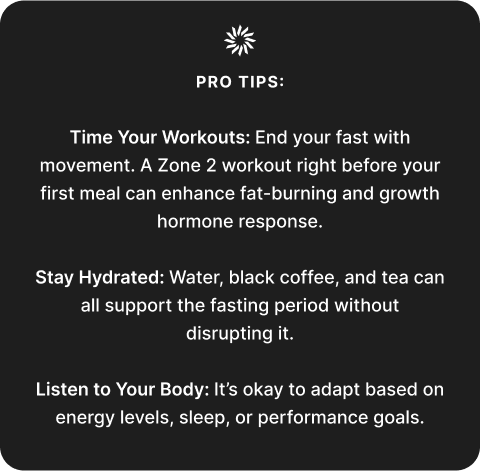
For our Clay Members who train daily, fasting supports recovery between training sessions—especially when timed right before their first meal.
Anabolic Pathways
Fasting activates pathways like autophagy (cellular cleanup) and ketogenesis (fat-burning), which optimize energy use and repair damaged cells.
I tell Clay Members that fasting is like spring cleaning for your cells—done daily.
Written by Andrew Browning, Coaching Director @ Clay Health & Care Andrew Browning is a performance coach and educator with nearly two decades of experience in training, teaching, and behavior change. As Clay’s Coaching Director, he combines deep knowledge in exercise physiology, metabolic health, and recovery with a passion for helping people build sustainable habits that fuel performance at every level.
Reviewed by Dr. Allen Gorman, Medical Director @ Clay Health & Care Dr. Allen Gorman is a physician-scientist with a focus on metabolism, aging, and cellular repair. His clinical and research work spans two decades, with a passion for translating complex science into actionable health strategies.
What if the secret to aging well was in your mindset? Dr. Nick Engerer, longevity expert and founder of A Longer Life, shares his personal and professional journey into the science of healthspan. From cutting-edge early detection technologies to practical strategies like better sleep, movement, and purpose, Dr. Engerer outlines how anyone can adopt a “longevity mindset”—and why doing so can profoundly impact not just how long you live, but how well you live.
What You’ll Take Away:
How a health scare in his twenties transformed Dr. Engerer’s life
The power of mindset in extending healthspan and quality of life
How early detection through advanced technologies can prevent disease
The role of genetics and family history in shaping your health journey
Real-life examples of thriving, purpose-driven older adults (yes, including Martha Stewart and The Rolling Stones)
Why passion projects and community can be just as vital as nutrition and exercise
A preview of Dr. Engerer’s Costa Rica docuseries and his blog as a hub for longevity enthusiasts
Why This Matters:
By understanding and tracking core biomarkers, you gain powerful insight into your risk for cLongevity isn’t just about living longer—it’s about thriving longer. This conversation helps reframe aging from something to fear into something to optimize. Adopting a longevity mindset means understanding your body, your risks, and your purpose—and using that knowledge to live more fully at every age. At Clay, we are obsessed with biomarkers, which is why assessments are the starting point for every health optimization journey.
Dr. Valter Longo—renowned longevity researcher and author—breaks down the top biomarkers he uses to assess biological age and long-term health. While your birthdate tells you your chronological age, these measurable markers reveal your biological age—how well your body is really functioning.
What’s in this video:
The 5 key biomarkers Dr. Longo looks at to estimate biological age
How IGF-1, insulin, glucose, CRP, and triglycerides relate to aging and disease
Why systemic inflammation plays a critical role in longevity
The impact of fatty liver disease on metabolic health
The future of aging science: methylation testing and biological clocks
Practical ways to monitor your own biological aging process
Why This Matters:
You can’t change your chronological age, but you can influence how fast your body ages. By understanding and tracking these core biomarkers, you gain powerful insight into your risk for chronic disease, energy levels, and how long and well you’re likely to live. We say it all the time and we’ll keep saying it: t’s not just about adding years to your life—it’s about adding life to your years.
If you’ve ever had bloodwork done and been handed a sheet full of confusing numbers, you’re not alone. In this new episode, InsideTracker’s founder Dr. Gil Blander and registered dietitian Ashley Reaver explain how to make sense of your health data—and more importantly, how to use it to live longer and feel better.
This conversation is packed with insights on how to move from reactive healthcare to proactive prevention, especially using personalized biomarkers and lifestyle strategies backed by real-world data.
What You’ll Learn:
Why personalized health plans are more effective than one-size-fits-all advice
How organizing biomarkers by goal (like cognition or endurance) improves focus
Why continuous monitoring leads to better long-term results
The growing value of at-home testing for preventive health
How your daily habits interact with genetics to shape your healthspan
Why This Matters:
Most people only get health advice after something goes wrong. But the real power lies in prevention—catching risks early, building healthy habits, and tracking progress over time. By making complex data easier to understand and act on, tools like InsideTracker help you take control of your health before problems arise. It’s not just about living longer—it’s about living better, with more energy, focus, and resilience for the long haul.
It’s a staggering number: 88% of adults show signs of metabolic dysfunction. That means most of us are walking around with early indicators of chronic illness—often without realizing it.
In this discussion, Dr. Ben Bikman, a leading metabolic scientist and author of Why We Get Sick, explains how one hormone—insulin—plays a central role in everything from obesity to heart disease, diabetes, and even some cancers. At Clay, we see insulin resistance as one of the most important—and overlooked—drivers of poor health. That’s why this episode hits home.
Key Takeaways:
Insulin: What It Is and Why It Matters
What Happens When Insulin Stops Working Efficiently
Why Early Detection Is Everything
How to Improve Insulin Sensitivity
Why This Matters:
Insulin resistance often develops silently over years. By the time it shows up in your blood sugar, it’s already been impacting your health. But with the right testing and lifestyle shifts, it’s reversible. Understanding insulin may be one of the most important things you can do to extend your healthspan.
When you go in for a routine physical, you probably get a cholesterol test. And if you’re like most people, you hear terms like LDL, HDL, and total cholesterol… and then stop listening. It’s not your fault—it’s confusing.
In this Ask Me Anything episode, Dr. Peter Attia clears up the confusion. He dives into the most important (but often overlooked) drivers of cardiovascular disease: apoB, LDL-C, Lp(a), and insulin. While this episode gets a bit technical, the core message is surprisingly simple and incredibly relevant to how we approach care at Clay.
Why This Matters:
Cardiovascular disease is the #1 killer of adults in the U.S.—and it’s largely preventable. But to prevent it, you need to be looking at the right data. If you’re only tracking total cholesterol or LDL-C, you might be missing the real risks.
This episode is a powerful reminder that the right tests—like apoB, Lp(a), and fasting insulin—can change the course of your health. It’s why we include them in so many Clay Assessments.
At Clay Health & Care, we take a comprehensive approach to health optimization, focusing on the Five Elements of Health: Blood, Fuel, Body, Brain, and Heart. These elements form the foundation for understanding, tracking, and improving human performance and longevity. Among them, blood serves as the body’s information superhighway—carrying critical signals about metabolic health, immune function, hormonal balance, inflammation, and more.
Blood biomarker data provides a real-time snapshot of how the body is functioning. Whether you’re concerned about energy levels, weight management, athletic performance, or longevity, understanding your blood is the first step toward meaningful change.
This article is your starting point for exploring blood health, and it’s just the beginning. As new discoveries emerge in the science of longevity and performance, we’ll continue expanding our Health Journal with deeper dives into cholesterol, inflammation, hormone regulation, genetics, and other essential topics. Think of this as your evolving library of cutting-edge health insights—one you can always return to as science advances and your health journey unfolds.
Why Blood Matters: A Roadmap to Health
Most people don’t realize that hidden red flags in their blood can signal health concerns before symptoms appear. In my own practice, I’ve had too many conversations where a client felt “fine,” yet their blood told a very different story—one that helped us intervene early and change the trajectory of their health. Blood testing allows us to move beyond guesswork, offering data-driven insights into the body’s current state and guiding personalized interventions.
Unlike standard reference ranges—often derived from the average (and frankly, unhealthy) population—we at Clay compare results to optimal ranges. Our goal is to help clients strive toward and achieve peak health, not just avoid disease. We emphasize tracking key markers like fasting insulin, ApoB, and triglyceride-to-HDL ratio to gain a precise picture of metabolic and cardiovascular health.
As I’ve sat with hundreds of clients reviewing their bloodwork, I’ve seen time and again how empowering it can be. Whether it’s identifying a silent metabolic issue or confirming that a new routine is working, the blood gives us honest feedback. It’s one of the most powerful tools we have to help people truly understand their bodies and make confident, meaningful changes.
Core Biomarkers in Blood Health
Biomarkers are measurable indicators of biological processes happening within the body. They offer insight into metabolic health, cardiovascular function, inflammation, and hormonal balance, serving as crucial tools for detecting early signs of dysfunction. The power of blood biomarkers lies in their ability to provide a real-time snapshot of your current health status while also tracking trends over time. However, interpreting these markers isn’t always straightforward—context matters. Individual variations, lifestyle factors, and genetic predispositions all play a role in determining what’s truly optimal for you. That’s why, at Clay, we go beyond conventional reference ranges, using advanced testing and a systems-based approach to personalize health optimization strategies.
Cholesterol: Beyond the Numbers
Cholesterol has been oversimplified in mainstream health narratives. The focus shouldn’t just be on total cholesterol or LDL levels but on cholesterol balance, particle size, and ApoB concentration, which provide a more accurate measure of cardiovascular risk.
ApoB: A better predictor of cardiovascular disease than LDL alone.
Triglyceride-to-HDL Ratio: An essential metric for assessing metabolic health.
Conventional medicine often jumps to prescribing statins, but our approach is different: We evaluate lifestyle, nutrition, and metabolic factors before considering pharmaceutical interventions such as:
Exercise & Movement: Regular physical activity, particularly resistance training and Zone 2 aerobic work, can improve lipid profiles.
Metabolic Health: Managing insulin resistance through fasting protocols, blood sugar stabilization, and stress reduction.
Targeted Supplementation: Incorporating berberine, niacin, or red yeast rice under clinical guidance.
Sleep & Recovery: Prioritizing high-quality sleep, as poor rest can negatively impact lipid metabolism.
Inflammation Markers: The Silent Alarm
Inflammation is the body’s natural defense system, but when it becomes chronic, it contributes to nearly every major disease, including heart disease, diabetes, and neurodegeneration. The challenge? You don’t always feel chronic inflammation happening, which makes testing essential.
hs-CRP (High-Sensitivity C-Reactive Protein): Indicates systemic inflammation and cardiovascular risk
Homocysteine: Linked to vascular and cognitive health
Fibrinogen: A marker of clotting potential and inflammatory burden
Monitoring and addressing these markers can prevent long-term damage, often through dietary adjustments, stress management, and targeted supplementation.
Hormones: The Regulators of Well-Being
Hormonal imbalances don’t just impact reproductive health—they influence metabolism, energy, mood, cognition, and overall vitality. At Clay, we take a comprehensive look at key hormones for both men and women, ensuring balance for long-term health and performance.
Testosterone & Estrogen: Essential for muscle maintenance, bone density, cardiovascular health, and cognitive function. Imbalances can lead to fatigue, weight gain, low libido, and mood disturbances.
Cortisol: Regulates stress response, metabolism, and immune function. Chronic elevation can contribute to inflammation, poor sleep, and metabolic dysfunction.
Thyroid Markers (TSH, Free T3, Free T4, Reverse T3): Play a critical role in energy production, weight regulation, and metabolic efficiency. Suboptimal thyroid function often goes undiagnosed but can significantly impact daily life.
For men, declining testosterone levels can lead to reduced strength, brain fog, and metabolic slowdowns, while for women, estrogen and progesterone shifts (especially during perimenopause and menopause) can cause symptoms like night sweats, weight fluctuations, and mood instability. Our approach includes advanced hormone testing, lifestyle interventions, and bioidentical hormone replacement therapy (HRT) when clinically appropriate to restore balance and optimize well-being.
Genetics: The Blueprint for Personalized Health
While genes aren’t written in stone, they provide crucial insights into health risks and optimization strategies. We analyze genetic data alongside blood biomarkers to develop personalized action plans, covering:
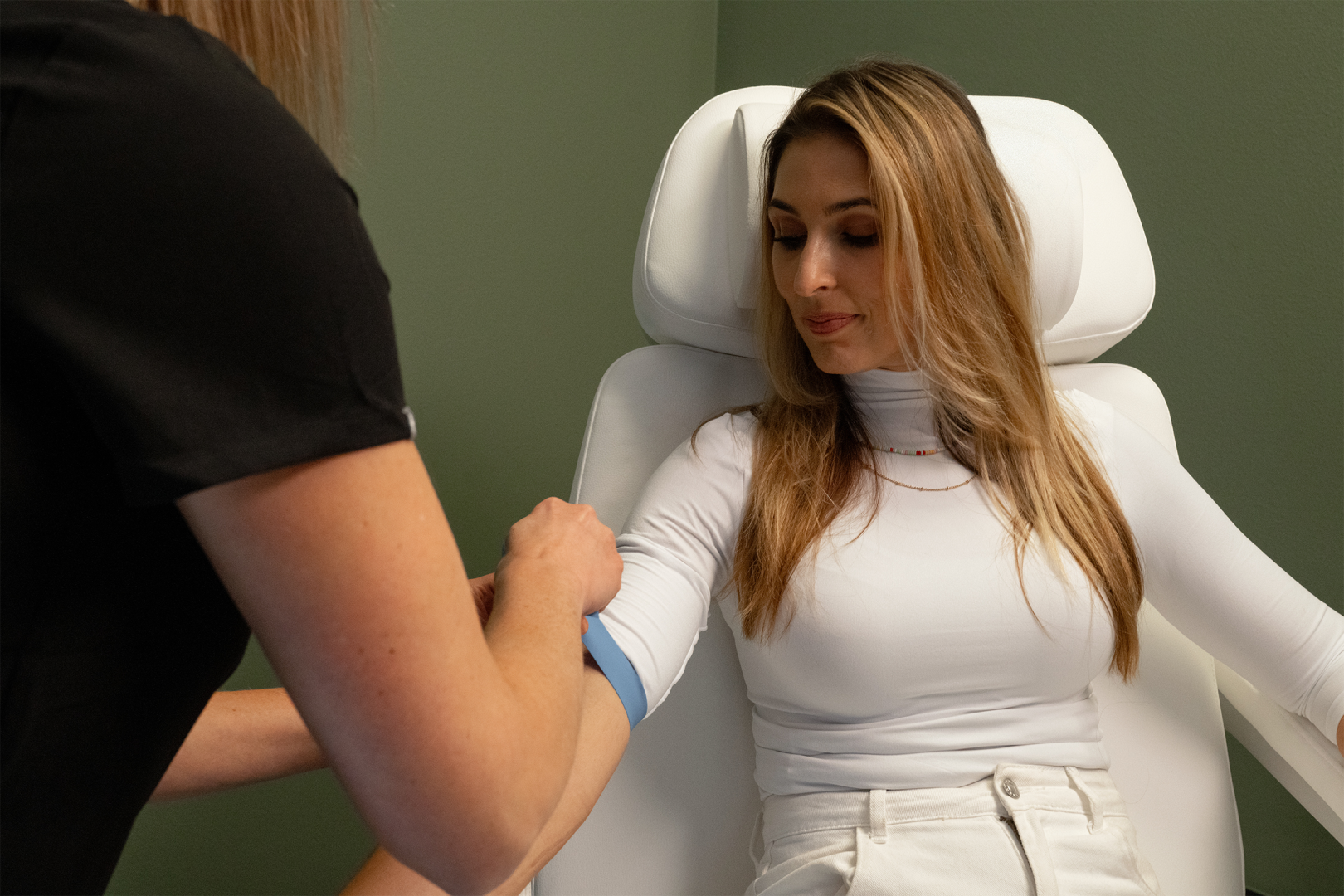
Client & Clay Clinician reviewing 50+ biomarker panel—turning raw data into a personalized plan for optimal health.
The Clay Approach: Advanced Testing & Contextual Analysis
Blood testing should go far beyond conventional panels that offer only a snapshot of basic health markers. Most traditional tests are designed to catch disease once it has already developed. Our approach is different—we focus on proactive, data-driven insights that help identify early warning signs and optimize health before issues arise.
We utilize comprehensive biomarker testing to assess metabolic health, inflammation, hormone balance, and cardiovascular risk factors, among others. But data alone isn’t enough. Too often, blood test results are given to patients with little explanation beyond whether a number falls within a generic reference range—ranges that are based on the average (and often unhealthy) population. At Clay, we contextualize your results using a more precise standard: what is optimal, not just what is “normal.”
Larger Panels: We test a broader range of biomarkers than standard primary care visits
Lifestyle Context: Data is integrated with nutrition, exercise, and recovery insights
Scoring Algorithm: Blood data is analyzed within the framework of all Five Elements of Health
We believe this data should be democratized. Your bloodwork should be something you understand, not a mystery hidden behind medical jargon. Our clinicians take the time to break down results, explaining what each marker means in relation to your personal health, lifestyle, and goals. This shared knowledge allows you to take an active role in your own health journey, making informed decisions about interventions, whether lifestyle-based or clinical.
Through this personalized and proactive approach, we empower our clients to take control of their health—not just react to symptoms, but prevent issues before they start. By continuously refining our understanding of blood biomarkers and incorporating new scientific advancements, we ensure that you always have access to the most cutting-edge insights for longevity and peak performance.
Blood in Action: Clay’s Health Optimization Programs
At Clay Health & Care, we incorporate blood biomarker testing into multiple programs:
Immune Health: Assessments identify immune function, while dietary and supplement strategies optimize resilience.
Hormonal Balance: Blood tests guide interventions, from lifestyle changes to bioidentical HRT.
Inflammation Reduction: Comprehensive panels pinpoint chronic inflammation sources and provide targeted solutions.
Genetic Insights: Combining DNA analysis with bloodwork offers a holistic view of metabolic and endocrine health.
These programs are designed to address underlying imbalances and empower individuals to take control of their health.
Taking Control: Blood as a Continuous Feedback Loop
Your blood doesn’t just tell you where you are—it shows where you’re headed. Regular testing creates a feedback loop, allowing for iterative adjustments in diet, exercise, stress management, and supplementation.
By tracking the right biomarkers, comparing results to optimal—not average—ranges, and working with expert clinicians, you can make informed decisions that lead to long-term vitality.
If you’re ready to take control of your health, start by understanding your blood. It’s not just data—it’s the key to unlocking your highest potential.
Written by Dr. Allen Gorman, Medical Director @ Clay Health & Care Dr. Allen Gorman is a physician-scientist with a focus on metabolism, aging, and cellular repair. His clinical and research work spans two decades, with a passion for translating complex science into actionable health strategies.
Maggie Riemenschneider is a nurse practitioner with a holistic and personalized approach to care. Drawing on her background in primary care, functional medicine, and women’s health, she helps patients uncover the root causes of their symptoms and empowers them to take charge of their long-term health.
Sources
Ridker, P. M., et al. (2002). “C-reactive protein and other markers of inflammation in the prediction of cardiovascular disease in women.” New England Journal of Medicine.
Sniderman, A. D., et al. (2019). “Apolipoprotein B versus LDL cholesterol in estimating cardiovascular risk: Positioning ApoB in clinical practice.” The Lancet.
Bhasin, S., et al. (2018). “Testosterone therapy in men with hypogonadism: An Endocrine Society clinical practice guideline.” Journal of Clinical Endocrinology & Metabolism.
Frayn, K. N. (2010). “Metabolic regulation: A human perspective.” Wiley-Blackwell.
Bouchard, C., et al. (2013). “Genomics and personalized medicine: What everyone needs to know.” Oxford University Press.