Joe DeFranco, legendary strength and conditioning coach, delivers a no-bs, high-impact solution for flexibility and mobility with his “Limber 11” routine. Designed to improve performance and decrease low back pain, this sequence includes foam rolling, dynamic stretches, and movement drills that are both practical and highly effective. Whether you’re an elite athlete, suffering from lower back problems, or just aiming to move better and feel better, DeFranco’s approach is a masterclass in simple, powerful training.
Why This Matters:
We know that longevity and high performance don’t just come from strength — they come from moving well, recovering smartly, and maintaining a resilient body. Mobility work like the “Limber 11” isn’t just about flexibility; it’s a foundation for injury prevention, optimal training outcomes, and quality of life over decades. Joe DeFranco’s routine is a perfect example of how intentional, consistent movement can help you build a body that stays strong, durable, and capable at any age.
In this quick but vital reel, Dr. Mary Claire Haver — a leading expert on women’s health — explains why menopause isn’t just about aging. She highlights how this major hormonal shift impacts the risk of developing a wide range of diseases and conditions, serving as a wake-up call for proactive healthcare.
At Clay, we believe that proactive, personalized care at every life stage is essential to optimizing health, longevity, and performance. Menopause is a critical transition that often goes overlooked in traditional medicine — but it shouldn’t. Dr. Haver’s message is a reminder that tuning into these changes early empowers you to take control of your health trajectory with clarity and confidence.
In this episode of Peter Attia’s podcast, The Drive, Olav Aleksander Bu, one of the world’s top endurance coaches and sports scientists discusses the science behind elite athletic performance — getting into everything from functional threshold power to VO2 max to lactate threshold to mastering nutrition strategies that fuel world-class endurance. Olav shares his precision-driven philosophy on training, explains the power of consistent testing, and offers a glimpse into the future with how artificial intelligence is reshaping the landscape of athletic optimization.
Why This Matters:
At Clay, we view performance metrics not just as numbers, but as tools for unlocking the next level of health, resilience, and longevity. Whether you’re training for a personal best or optimizing daily energy for life’s demands, understanding how to interpret and act on your body’s signals is critical. Olav’s insights give our community a masterclass in what it means to pursue excellence with intention — blending science, consistency, and innovation to maximize results over the long term.
In this 2+ hour conversation, The Diary of a CEO, host Steven Bartlett sits down with Dr. Benjamin Bikman, a powerful voice in metabolic health and author of Why We Get Sick. Together, they delve into the hidden epidemic of insulin resistance — a condition affecting nearly 88% of adults today — and how it’s fueling not just fat gain but the chronic disease epidemic. Dr. Bikman shares a clear and easy to understand framework for understanding glucose, insulin, and fat metabolism, and offers steps anyone can take to restore metabolic health and longevity.
Why This Matters:
At Clay, we believe metabolic health is the cornerstone of peak living — it’s not just about your weight, it’s about your energy, resilience, and vitality. Dr. Bikman’s insights connect the dots between our everyday choices and the beneath the surface forces that determine how we age and perform. For anyone serious about optimizing body composition, protecting brain health, and living a longer, higher-quality life, understanding and mastering insulin is super helpful! This conversation delivers the knowledge and motivation to take control.
This one’s one of the most popular conversations that we ask our longevity clients to listen to. Here, Dr. Peter Attia and Dr. Andrew Huberman team up to tackle one of the biggest threats to health and longevity: heart disease. Together, they dive into:
Why heart attack often presents without warning
How cardiac life support has evolved
The importance of tracking markers like ApoB early in life.
Dr. Attia pulls from his clinical expertise to share material strategies for managing blood pressure, optimizing exercise and nutrition, and using routine testing to stay ahead of cardiovascular and kidney risks — while Dr. Huberman brings his sharp lens on brain-body performance.
Why This Matters:
At Clay, we’re about more than avoiding disease — we’re obsessed with building a future of thriving health. Conversations like this one are crucial because they shift the focus from crisis response to proactive care. Understanding how to track and manage key markers, design training and nutrition plans with precision, and apply the right interventions at the right time can dramatically extend your cognitive and physical peak.
Huberman Lab is a mainstay at this point. Dr. Andrew Huberman takes a deep dive into how exercise doesn’t just build stronger bodies — it builds smarter, healthier brains. In this episode, Andrew explains:
How different forms of exercise trigger specific neurochemical responses that heighten alertness, boost learning, and enhance neuroplasticity.
The science behind hormones like osteocalcin and brain-derived neurotrophic factor.
An actionable roadmap for designing a weekly exercise plan that maximizes brain health, performance, and longevity.
Why This Matters:
All of us at Clay believe that truly optimized health means being as sharp, resilient, and capable mentally as you are physically. Dr. Huberman’s insights reinforce what we prioritize in every health journey: strategic movement isn’t just about looking fit — it’s about fueling the brain for better decision-making, learning, memory, and long-term cognitive protection.
In this mega popular TED Talk (10+ million views & counting!), neuroscientist Dr. Wendy Suzuki delivers a powerful, science-backed case for why exercise is the single best thing you can do today to support your brain health. In under 20 minutes, Dr. Suzuki breaks down how physical activity boosts mood, sharpens memory, and even builds resilience against neurodegenerative diseases like Alzheimer’s. It’s a practical reminder that moving your body doesn’t just change your physique — it literally rewires and protects your brain.
Why This Matters:
We know that optimal health is about more than physical fitness — it’s about building a strong, capable mind alongside a strong body. Dr. Suzuki’s insights highlight a core truth we live by: exercise is a foundational tool for longevity, cognitive performance, and quality of life. If you’re serious about enhancing brain resilience, mental sharpness, and emotional well-being, consistent movement isn’t optional — it’s a non-negotiable.
In this conversation from The Drive, Dr. Peter Attia and renowned sleep scientist Dr. Matthew Walker dive deep into one of the most vital—and overlooked—pillars of health: sleep. Pulling together highlights from past episodes, they explore why we sleep, how sleep stages and chronotypes influence health, and what practical steps you can take to optimize total sleep and sleep efficiency. They also dig into zeitgeist topics like the benefits and drawbacks of napping, the true impact of blue light and caffeine, and safer alternatives to sleeping pills for those struggling with rest.
Why This Matters:
At Clay, we know that sleep isn’t just about feeling rested — it’s fundamental to performance, recovery, metabolism, and longevity. The insights from Dr. Attia and Dr. Walker offer a blueprint for anyone serious about building a resilient, high-performing body and mind. By understanding and applying the science of sleep, you can dramatically improve your health span, sharpen cognitive function, and give your body its best shot at repair and growth every single day.
If you care about your heart—and aging well in general—do yourself a favor and check out this conversation with Dr. Benjamin Levine and Rhonda Patrick. He breaks down how the right kind of exercise can actually reverse heart aging by up to 20 years. He’s one of the top experts when it comes to how the heart adapts to stress, movement, or the lack of it.
Why This Matters:
I’ve sent this one to a bunch of clients already because it’s such a clear case for why we train the way we do at Clay. Your heart’s not a ticking clock—it’s a muscle. And with the right kind of consistent work, it can actually get younger.
Unless you find yourself steeped in the world of performance and longevity, Nicotinamide Adenine Dinucleotide (NAD⁺) may not be a household name yet—but it’s steadily getting there. This essential molecule is rapidly emerging as a focal point in conversations about cellular health, aging, and energy metabolism. And for good reason: NAD⁺ is fundamental to how our bodies produce energy, repair cells, and respond to stress. Without it, life—at least as we know it—doesn’t function.
So what exactly is NAD⁺? Why does it decline with age? And what are researchers uncovering about its role in longevity and performance?
What is NAD⁺?
NAD⁺ is a coenzyme found in every living cell. Think of it as a cellular power broker—essential for converting the food you eat into energy your body can actually use. It plays a critical role in redox reactions (the transfer of electrons), which power your mitochondria—the “engines” of your cells.
In short, NAD⁺ is a major player in keeping your cells alive, energized, and functioning.
It doesn’t stop at energy metabolism. NAD⁺ is also involved in:
DNA repair
Inflammation regulation
Gene expression via sirtuins (a family of proteins tied to aging)
Stress responses
Circadian rhythm balance
Which means: from brain clarity to muscle repair to how you recover from a tough workout, NAD⁺ is pulling the strings behind the scenes.
Why Does NAD⁺ Matter More as We Age?
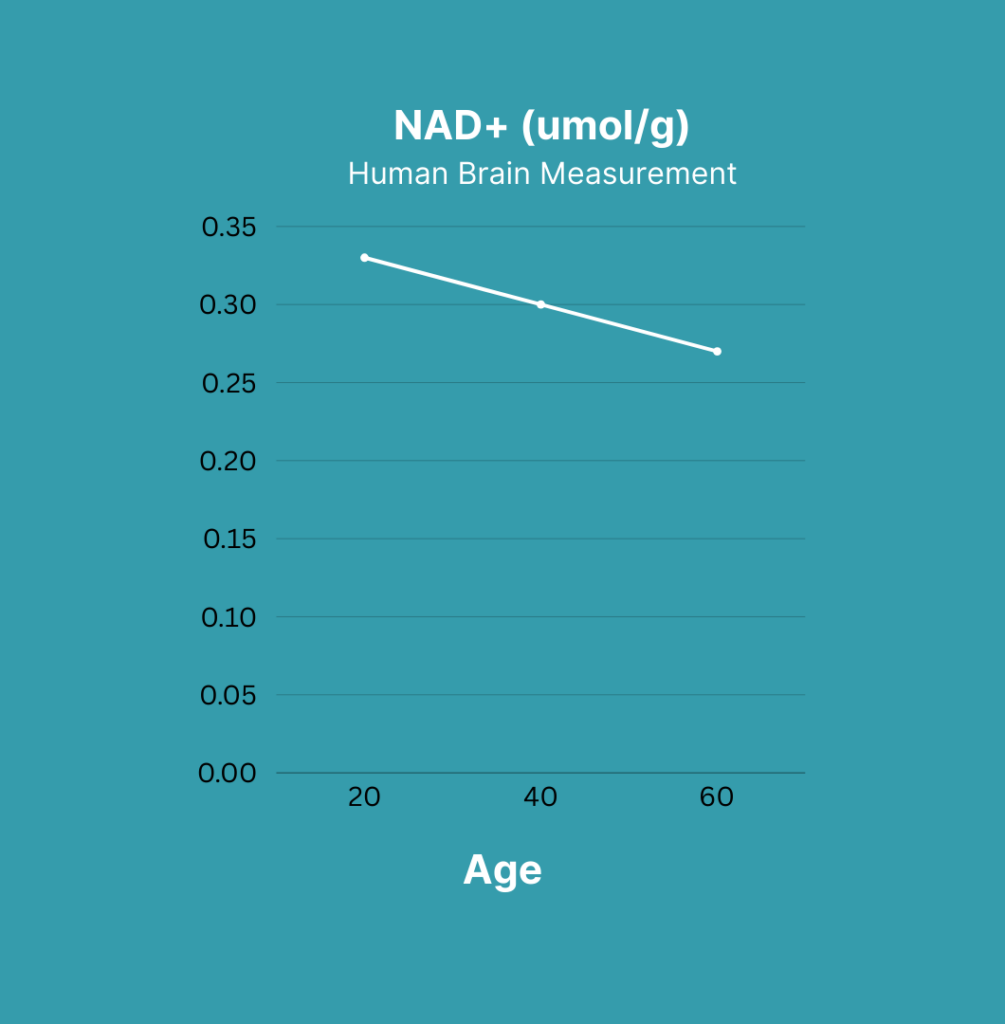
NAD⁺ levels naturally decline with age. By the time we’re in our 40s or 50s, we may have half the NAD⁺ we did in our youth. That drop is associated with a cascade of effects:
Slower metabolism
Increased oxidative stress
Reduced mitochondrial efficiency
Decreased cognitive performance
Lower physical endurance
Weakened cellular repair mechanisms
In vivo NAD assay reveals the intracellular NAD contents and redox state in healthy human brain and their age dependences, Xiao-Hong Zhu | Study Link
In simpler terms: less NAD⁺ = less energy, less resilience, and a greater vulnerability to the effects of aging.
How Does the Body Produce NAD⁺ Naturally?
Before we ever consider supplements or therapies, it’s important to understand that your body already makes NAD⁺—in three main ways:
1. Preiss-Handler Pathway Converts niacin (vitamin B3) from the diet into NAD⁺.
2. De Novo Pathway Builds NAD⁺ from tryptophan (an amino acid found in protein-rich foods like turkey and eggs).
3. Salvage Pathway Recycles NAD⁺ from other molecules that have already been used. This is the most efficient and heavily relied upon method.
However, as we age, these pathways become less efficient. Enzymes that break down NAD⁺ become more active, and the body’s ability to recycle it declines. This metabolic slowdown is one of the major reasons scientists are now focusing on ways to support or restore NAD⁺ levels.
Can Lifestyle Affect NAD⁺ Levels?
Yes—and dramatically. Here are a few ways to naturally support your body’s NAD⁺ production:
✔️ Exercise regularly – especially endurance training, which upregulates key NAD⁺-related enzymes ✔️ Eat a nutrient-dense diet – foods rich in B vitamins, tryptophan, and antioxidants ✔️ Get adequate sleep – sleep is when cellular repair ramps up, and NAD⁺ is key to that process ✔️ Minimize chronic stress – high cortisol levels can suppress the enzymes needed for NAD⁺ regeneration
These aren’t just good wellness habits—they’re also direct inputs into the machinery that maintains your NAD⁺ levels.
Why Is NAD⁺ in the Zeitgeist Now?
Although NAD⁺ was discovered more than a century ago, its connection to aging and performance is a relatively recent frontier.
In 2020, a pivotal review published in Pharmaceuticals by Radenković and Verdin explored NAD⁺’s emerging role in what’s now referred to as longevity medicine. It highlighted how replenishing NAD⁺—through precursors, lifestyle changes, or therapies—could improve mitochondrial health, increase resilience to metabolic stress, and slow age-related decline.
As a result, NAD⁺ is now part of the conversation among elite athletes, biohackers, and researchers alike. It’s no longer just about lifespan—it’s about healthspan.
Given the decline in NAD⁺ with age, many are exploring ways to supplement it. Oral NAD⁺ precursors like NR (nicotinamide riboside) and NMN (nicotinamide mononucleotide) are popular, though more research is needed to confirm their absorption and clinical efficacy.
Another promising method is subcutaneous NAD⁺ injections. These allow for a slow, sustained release of NAD⁺ into the body’s fat stores, which then gradually enter circulation. While more clinical studies are underway, early anecdotal reports are compelling—individuals often describe:
Elevated energy
Improved focus and mental clarity
Enhanced recovery after exercise
Better sleep quality
Greater stress resilience
It’s an exciting area, but one that calls for responsible, science-backed implementation.
“When it comes to subcutaneous NAD⁺ injections, the clinical effects are impressive—patients often report increased energy, sharper cognition, better sleep, and enhanced well-being. The slow absorption into fatty tissue offers a sustained release, making it a convenient, less invasive option for long-term benefits like improved metabolism and stress resilience.”
Written by Dr. Allen Gorman, Medical Director @ Clay Health & Care Dr. Allen Gorman is a physician-scientist with a focus on metabolism, aging, and cellular repair. His clinical and research work spans two decades, with a passion for translating complex science into actionable health strategies.
Reviewed by Andrew Browning, Coaching Director @ Clay Health & Care Andrew Browning is a performance coach and educator with nearly two decades of experience in training, teaching, and behavior change. As Clay’s Coaching Director, he combines deep knowledge in exercise physiology, metabolic health, and recovery with a passion for helping people build sustainable habits that fuel performance at every level.