


In a world where everyone’s juggling a million things, who has time for complicated health overhauls? I will admit that grocery shopping basics is a tired topic at this point, but I teach these to all of my clients. These are real-deal strategies that help you dial in your nutrition and build lifelong habits.
As the Director of Coaching at Clay, I’ve seen how small, low-effort tweaks can lead to big wins. We’re tapping into that universal desire to get more from less work, turning your weekly grocery trip into an efficient path to better eating.
Here’s how to build a healthier cart with ease.
1. Fuel up first – Avoid the hunger trap
More food options look extremely tempting when your next meal is weighing heavy on your mind. That’s no accident as stores are consciously designed to play on your social and emotional feelings. The fix is obvious. Eat a quick snack or time your trip right after a meal. This simple move curbs impulse buys on tempting junk, keeping your focus on nourishing choices. Smarter timing = fewer regrets.
2. Master the perimeter power play
The outer edges contain majority of the “good stuff”—fresh fruits, veggies, lean meats, and dairy—while the inner aisles are packed with ultra-processed pitfalls. Start your shop on the outer edges to load up on nutrient-dense foods that fuel your body. Those middle aisles contain the hassle of decoding endless options. Sure, some stores mix it up with healthy offerings in the middle and of course, you’ll need to secure your pantry basics from the middle aisles, but sticking mostly to the perimeter is a the right instinct to have.
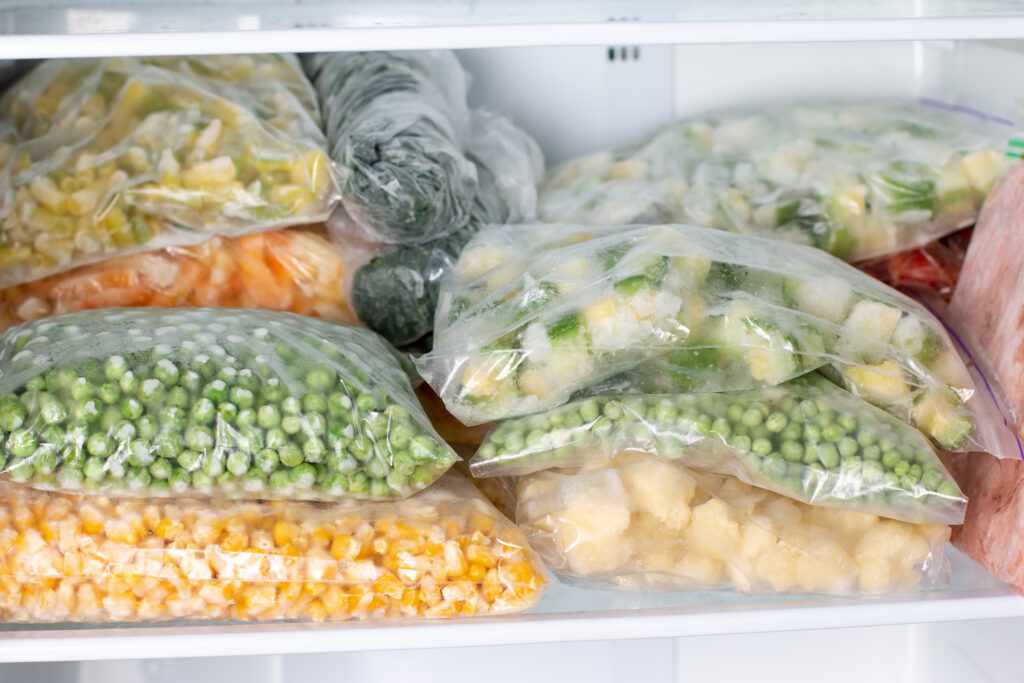
Fresh is great. Frozen is reliable. Keep high-quality produce on hand without the waste or pressure.ls second to catch added sugars and unnecessary fillers.
3. Embrace frozen produce
Fresh produce is great, but let’s be real—it spoils fast, especially if you’re cooking for one or two. Don’t fear frozen fruits and veggies: they’re picked at peak ripeness, flash-frozen to lock in nutrients, and they last way longer in your freezer. Utilizing frozen produce options means less waste, fewer trips to the store, and easy additions to smoothies, stir-fries, or sides. Bonus: they’re often cheaper and pre-chopped for zero prep work. When choosing frozen options, skip added sauces and sugars to keep it clean and effortless. And when it’s time to heat them, transfer out of the plastic—never microwave in plastic.
4. Scan nutrition labels
Labels can feel overwhelming, but you don’t need to be a nutritionist to crack them. Here’s the low-effort rule: If sugar (or its aliases like high-fructose corn syrup) is in the top three ingredients, treat it like dessert—not an everyday staple. Also, scan for ingredient lists that read like a chemistry lab: too many fillers, gums, or preservatives? Pass every time. Focus on these two easy checks and you’ll be ahead of the pack.
5. Plan a weekly, seasonal-forward menu
Create a weekly menu to guide your shopping and save time. A menu builds your grocery list automatically, prevents aimless store wandering, and cuts impulse buys. Lean into seasonal produce for fresher, tastier, and cheaper options. This one-and-done planning session streamlines your week and keeps your meals consistent.
Check out seasonalfoodguide.org or Ask the Food Geek

Perimeter first for whole foods. Labels second to catch added sugars and unnecessary fillers.
6. Know your store – Get in & out
Familiarize yourself with your go-to store’s setup: where’s the produce, the dairy, the healthy snacks? This insider knowledge lets you cruise through without detours into temptation zones. Over time, it turns shopping into a quick routine, freeing up your mental energy and time for everything else going on in your life.
7. Leverage apps for temptation
Want healthy groceries without the in-store temptations? Use apps like Instacart, Amazon Fresh, or local store platforms to order exactly what you need, delivered to your door (or pick-up). Build your cart from your weekly menu, stick to your list, and avoid impulse buys that might be offered while scrolling. Most apps let you save favorite products to keep things convenient when re-ordering.

These strategies aren’t about perfection, they’re about smart, sustainable shifts that fit your busy life. Start with one or two and watch how they compound into healthier habits with zero extra grind. Your body (and wallet) will thank you.
Author
Written by Andrew Browning, Coaching Director @ Clay Health & Care
Andrew Browning is a performance coach and educator with nearly two decades of experience in training, teaching, and behavior change. As Clay’s Coaching Director, he combines deep knowledge in exercise physiology, metabolic health, and recovery with a passion for helping people build sustainable habits that fuel performance at every level.
Reviewed by Dr. Allen Gorman, Medical Director @ Clay Health & Care
Dr. Allen Gorman is a physician-scientist with a focus on metabolism, aging, and cellular repair. His clinical and research work spans two decades, with a passion for translating complex science into actionable health strategies.